

Beautiful hardwood floors make a home feel warm and finished. Whether you just installed new flooring or you’ve had it for years, a little care goes a long way toward protecting your investment.
Engineered hardwood flooring maintenance doesn’t have to be complicated. Regular cleaning, the right products, and a few preventive habits will keep your floor’s finish looking sharp and cut down on everyday wear. Engineered hardwood is more durable than many homeowners expect, but it’s still real wood, and it responds well to proper floor care.
At Innovative Kitchen and Flooring, we help homeowners choose flooring that fits their life, and we want that flooring to look just as good years from now as it does on installation day. Below is our guide to cleaning engineered hardwood floors, preventing scratches, avoiding common mistakes, and building a simple routine that keeps your floors looking their best.
Why Engineered Hardwood Is Easy to Live With

Engineered wood now accounts for more than half of the wood flooring market, making up roughly 50.5% of installations in 2024. Homeowners like that it pairs the look of real hardwood with better stability for busy households.
Modern engineered flooring is built in layers, with a genuine hardwood top layer bonded to a stable core. That construction helps it handle changes in temperature and humidity better than many traditional options, which makes it a practical choice for kitchens, living rooms, bedrooms, and other high-traffic areas.
Many engineered hardwood floors also carry finishes with roughly four times the scratch resistance of standard hardwoods. No wood floor is scratch-proof, but that extra durability, combined with routine cleaning, makes a real difference over the life of the floor.
With proper care, engineered hardwood can last 20 to 30 years or longer, which makes the small daily habits below well worth the effort.
Engineered Hardwood vs. Solid Wood
Engineered hardwood and solid wood flooring can look nearly identical once installed, but they’re built differently.
Solid wood is a single piece of wood that can be sanded and refinished many times over its life.
Engineered wood floors have a real hardwood top layer, often called the wear layer, sitting over layers of plywood or high-density core material. This layered build adds stability while keeping the look of authentic hardwood.
Depending on the thickness of the wear layer, many engineered hardwood floors can still be refinished. A floor with a 3mm wear layer, for example, can typically handle two rounds of sanding, extending its lifespan by decades. The goal of good maintenance is to protect that top layer so refinishing stays an occasional project instead of a necessity.
Daily Habits That Protect Your Floors
The best way to keep engineered hardwood looking good isn’t a deep clean every weekend. It’s stopping everyday dirt and moisture before they cause wear.
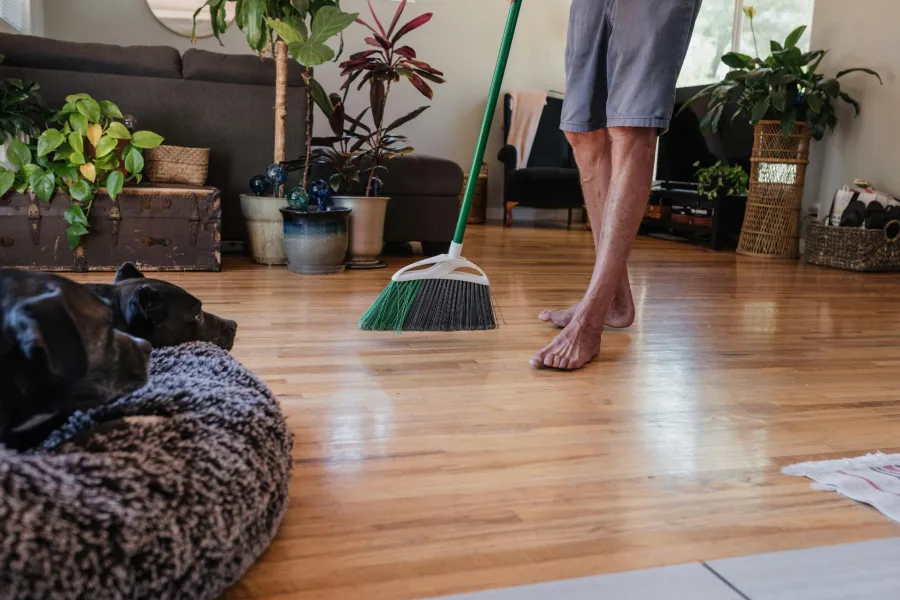
Remove dust every day. Small particles of dirt and debris act like sandpaper under shoes and slowly wear down your floor’s finish. You don’t need to mop daily, but you should clear dust with one of these:
- A microfiber dust mop
- A soft bristle broom
- A vacuum cleaner with a hardwood attachment
- A dry microfiber cloth for spot dusting
If you vacuum, turn the beater bar off so it doesn’t scuff the surface. Work in the same direction as the wood grain to pick up fine dust more effectively. A regular schedule keeps grit from building up in high-traffic areas.
Clean up spills immediately. Engineered hardwood resists moisture better than solid wood, but liquids left sitting on the surface can stain the finish and, over time, raise the risk of water damage. If something spills:
- Blot the liquid with a soft microfiber cloth.
- Gently clean the area with a slightly damp cloth if needed.
- Dry the surface right away so no standing water is left behind.
Excess water left on the floor is the biggest mistake we see. Even small amounts of standing water can work between boards and affect the structure of the flooring. A few seconds spent wiping up a spill helps prevent stains and keeps floors looking good for years.
Weekly Cleaning Done Right
Daily dust removal protects your floors day to day, but a weekly routine is what keeps engineered wood floors looking their best. The key is the right tools and never adding excessive moisture.
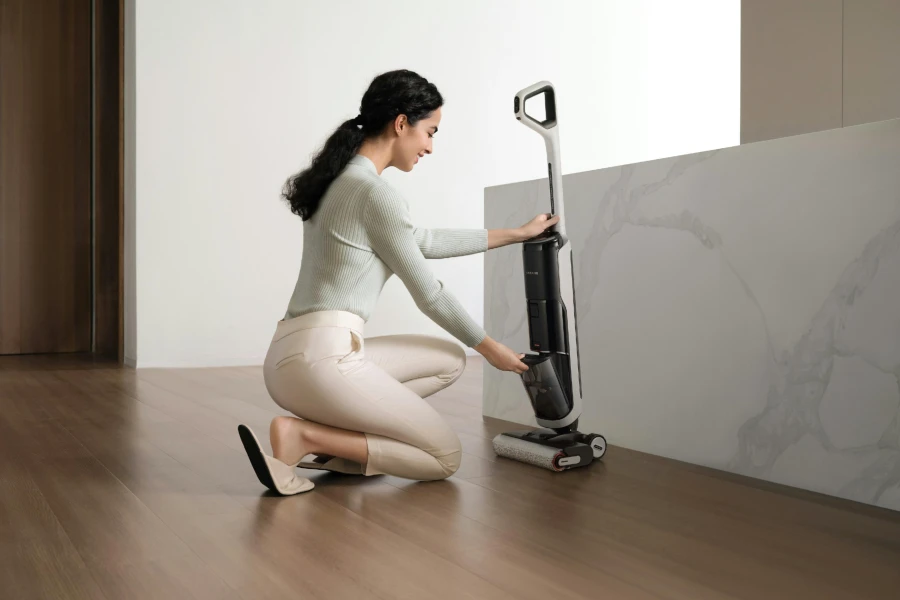
Vacuum without damaging the finish. A vacuum cleaner picks up dirt and debris that a broom might miss, especially along baseboards and between boards.
- Use the hardwood floor setting, or turn off the beater bar.
- Attach a soft floor brush if you have one.
- Vacuum corners and edges where dust collects.
- Follow up with a dust mop if needed.
Mop the right way. One of the most common questions we hear is whether you can damp mop engineered hardwood floors. You can, but technique matters.
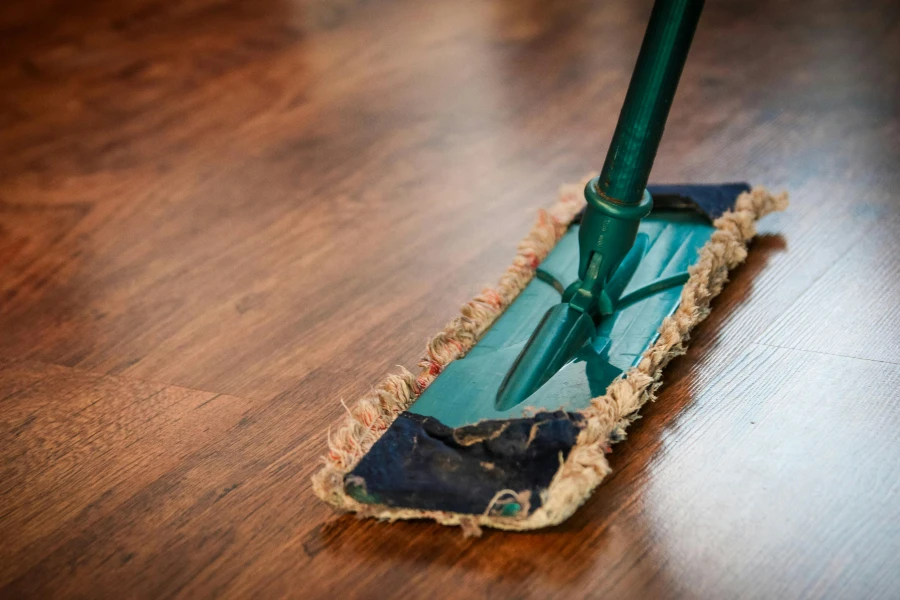
Use a clean microfiber mop with a mop pad that’s only slightly damp, never soaking wet. Pair it with a pH-balanced floor cleaner made for hardwood or a cleaning solution designed for engineered wood, and always follow the manufacturer’s instructions for your flooring and cleaner.
If you’re mixing a homemade solution, use just a few drops of mild dish soap in warm water. The mop should feel barely damp. After mopping, there should be little to no excess water left on the floor.
Work in the same direction as the wood grain, and use a light mist of cleaner instead of spraying the floor directly. This gives you plenty of cleaning power while helping you avoid excessive moisture that could damage the flooring over time.
Prevent Scratches Before They Happen
Most scratches don’t happen during cleaning. They happen during everyday life.

Protect high-traffic areas.
- Place area rugs where foot traffic is heaviest.
- Use entry mats to catch dirt before it reaches the floor.
- Sweep regularly to clear dust and debris before it can scratch the surface.
- Remove small stones and grit that stick to shoes.
Protect against furniture and pets.
- Add felt pads under furniture legs.
- Lift furniture instead of dragging it.
- Trim pets’ nails regularly to reduce scratches on wooden surfaces.
- Avoid rolling heavy objects directly across the floor.
These small habits add up to real protection for your floors over time.
Keep Moisture Under Control
Engineered hardwood is more stable than solid wood, but it’s still wood, and moisture is one of the biggest threats to how it looks and how long it lasts.
Watch indoor humidity. Wood expands and contracts as humidity changes through the year. High humidity can cause boards to swell, while low humidity can lead to shrinking or small gaps between planks. Maintaining indoor humidity between 35% and 55% helps prevent both problems. A humidifier or dehumidifier can help hold that range through the seasons.
Avoid standing water.
- Wipe up spills immediately.
- Never leave standing water on the floor.
- Keep wet shoes off the flooring.
- Use trays under indoor plants.
- Repair plumbing leaks promptly.
Excess moisture can seep between boards, leading to water damage, warping, and premature wear.
Common Mistakes That Shorten Floor Life
Many flooring problems aren’t about age. They come from the wrong products or the wrong cleaning method. Avoiding harsh chemicals is one of the simplest ways to protect your investment.
Cleaning products to avoid:
- Steam cleaners or steam mops
- Vinegar or vinegar-based cleaners
- Ammonia-based cleaners
- Wax products
- Oil soaps, including popular options like Murphy’s Oil Soap®, which can leave a greasy residue on floors
- Abrasive scrub pads or steel wool
Heat and moisture from steam cleaners can force water into the joints of the hardwood flooring and raise the risk of warping. Vinegar-based solutions can dull or damage the finish over time. Stick with a pH-balanced, pH-neutral cleaner made specifically for engineered hardwood.
Habits that cause unnecessary wear:
- Wearing high heels on the floor
- Letting dirt and debris build up between cleanings
- Dragging heavy furniture
- Leaving window coverings open all day in direct sunlight
- Using too much water while cleaning
Small changes to these habits can help your floors look better for many years.
When Your Floors Need More Than Routine Cleaning
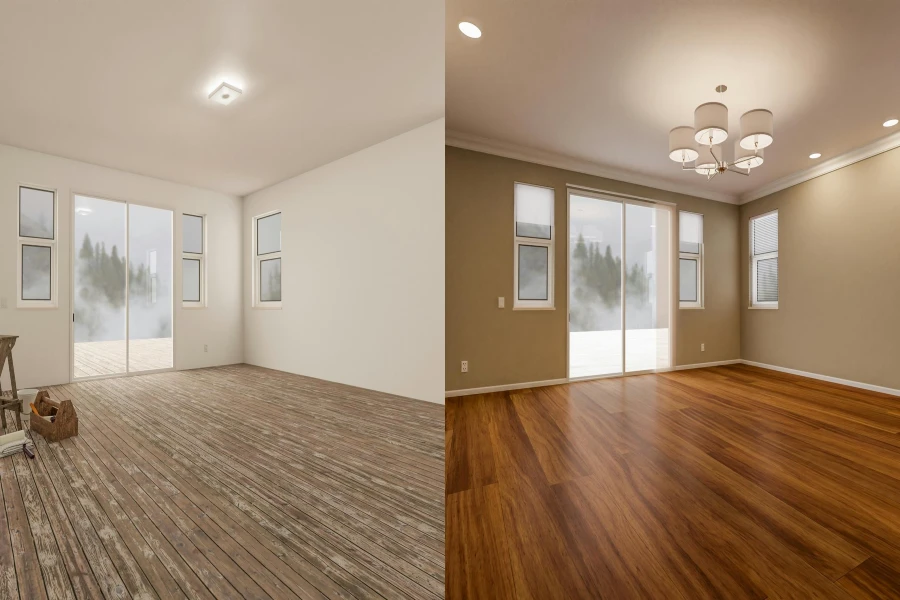
Even with excellent care, every floor shows some wear over time. Building routine inspections into your cleaning schedule helps you catch small problems, such as deep scratches, dull spots that don’t respond to cleaning, or early signs of water damage, before they require bigger repairs.
Depending on the thickness of the wear layer, many engineered hardwood floors can be sanded and refinished, with a thicker top layer often lasting two or three sandings before a new finish is applied. For minor surface issues, manufacturer-approved touch-up kits can extend the life of your flooring without a full replacement.
Clean Engineered Hardwood Floors With Ease
Keeping engineered hardwood flooring looking good doesn’t take a complicated routine or expensive equipment. A little attention each week, the right cleaning products, and a few preventive habits will protect your investment for years to come.
Regular sweeping, careful damp mopping, cleaning up spills immediately, and avoiding excessive moisture all help preserve your floor’s finish. Add proper humidity control and a few simple steps to prevent scratches, and you’ll have floors that withstand everyday life for decades.
At Innovative Kitchen and Flooring, we’re here to help you choose flooring that’s as practical as it is good-looking. Whether you’re comparing modern engineered flooring options, replacing older hardwood, or want advice on caring for the floors you already have, our team is ready to help.
Visit our showroom or contact us today to find the right flooring for your home, and learn how to keep it looking its best for years to come.