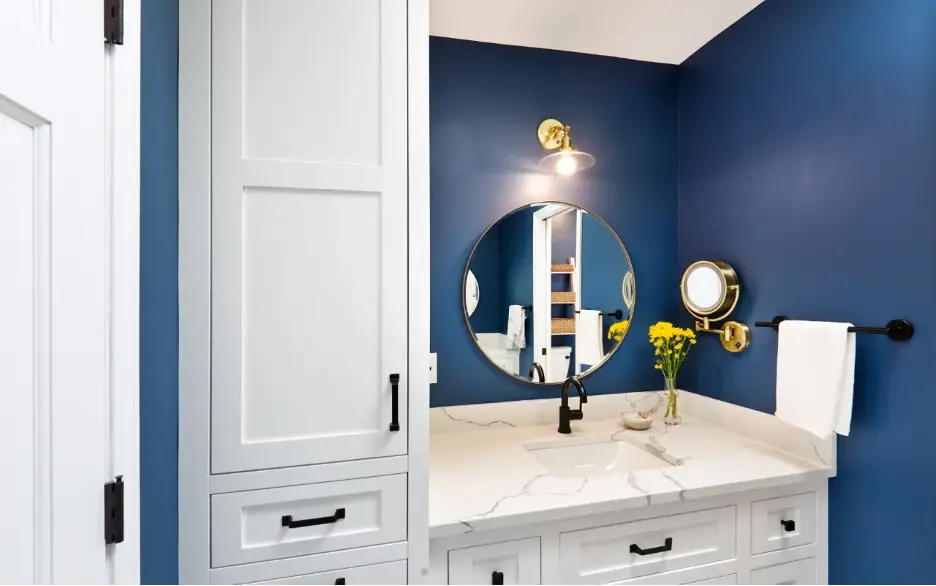


The best bathroom signs online are the ones that fit the room they’re going in: a moisture-resistant decorative sign for a home bathroom, or an ADA-compliant sign with raised text and braille for a business restroom. At Innovative Kitchen and Flooring, with showrooms in Chambersburg, PA, and Frederick, MD, we see plenty of both while helping homeowners finish a remodeled bathroom. This guide covers the styles worth a look, the materials that hold up to steam, and what to check before you order.
Why a Small Sign Does More Than You’d Think
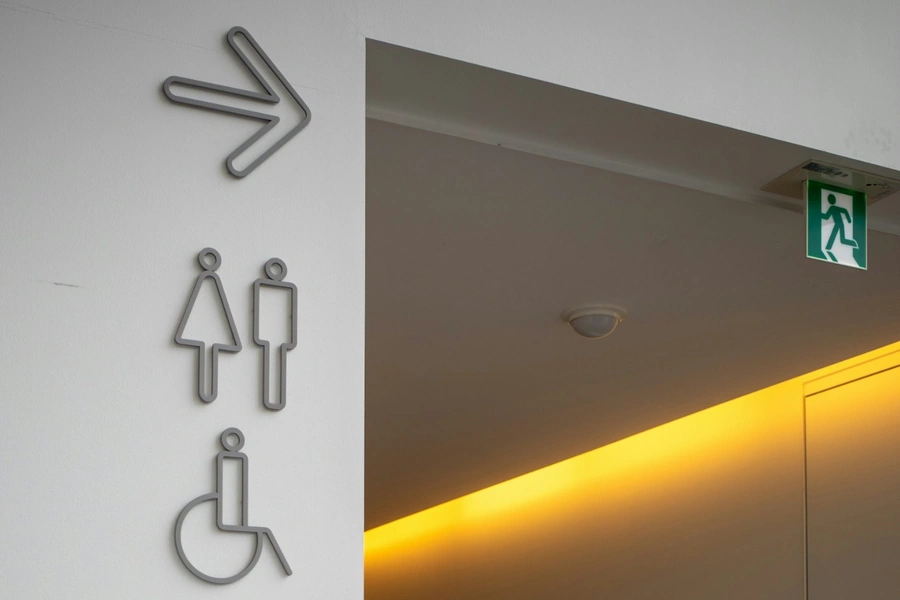
A sign is one of the least expensive things you’ll add to a bathroom, and one of the first things guests notice. In a home, it tells visitors which door is the powder room and saves them from opening the linen closet by mistake. It’s also an easy way to add some personality to a room that’s mostly tile, glass, and porcelain.
In an office, restaurant or shop, the job gets more serious. Restroom signs help customers and employees find the facilities without asking, and in public spaces they have to meet accessibility rules. The right choice depends on which of those two worlds you’re shopping for, so we’ll take them one at a time.
Popular Bathroom Signs for Your Home
Home bathroom signs are about style first, since no code tells you what to hang beside your own powder room door. Most of what you’ll find online falls into a few groups, and each one suits a different kind of space.
Vintage and Farmhouse Signs
Distressed metal and painted wood signs bring vintage character to a bathroom with plain finishes. Think enamel-look washroom plaques, old diner-style arrows and bath house lettering. They work best where the rest of the room is quiet, such as white subway tile or a painted vanity, because a busy sign on a busy wall just looks cluttered.
Check how the vintage look is made before you buy. A printed tin sign is light and easy to hang, while cast metal has real weight and needs proper anchors.
Funny Bathroom Signs
Humor is one of the biggest categories you’ll scroll through. The signs that age well are short and dry, like a “Please Seat Yourself” plaque or a polite reminder about the toilet paper. Our advice is to pick one and stop there, since a wall of jokes gets old faster than the grout does.
Keep the audience in mind too. What’s funny in a basement bathroom next to the game room may not be what you want guests reading in the main-floor powder room.
Modern and Minimalist Signs
Modern signs use clean icons or a single word in matte black, brushed brass, or clear acrylic. They suit newer bathrooms with flat-panel vanities, large-format tile, and simple hardware. If your faucet and cabinet pulls are brass, a small brass door sign ties the door to the rest of the room without much effort.
Size matters more here than with other styles. A minimalist sign that’s too large stops being minimalist, so measure the door or wall space before you add anything to your cart.
Personalized Bathroom Signs
Personalized bathroom signs let you choose the text, font, and colors, and sometimes add a family name or a custom graphic. They’re popular for kids’ bathrooms, guest baths, and vacation rentals where visitors need a few house rules. Most sellers show a preview as you type, which makes it easy to catch a typo before the sign is printed.
Custom work takes longer to ship and usually can’t be returned. Double-check the spelling, size, and mounting method before you place the order.
Restroom Signs for Businesses and Public Spaces
Restroom signs for an office, school, restaurant or other public building follow a different set of rules. Style still counts, but accessibility comes first, and the federal standards are specific about what a permanent restroom sign needs.
What ADA Compliance Requires
Under the 2010 ADA Standards for Accessible Design, signs that label permanent rooms such as restrooms need raised characters and Grade 2 braille so they can be read by touch. The raised text has to be uppercase and sans serif, between 5/8 inch and 2 inches tall, with a non-glare finish and clear contrast against the background. If the sign uses a pictogram to label the room, the symbol sits in a field at least 6 inches high.
Placement is part of ADA compliance too. At a single door, the sign goes on the wall beside the latch side, with the tactile characters between 48 and 60 inches above the floor. The U.S. Access Board’s guide to signs explains each rule with diagrams, and it’s worth reading before you order for a commercial space.
Choosing Signs for an Office, Restaurant or School
Once the accessibility basics are covered, you can choose a look that fits the building. Hotels and restaurants often go with brass or wood for warmth, while an office or school usually picks durable acrylic or brushed metal that’s easy to wipe down. Many sellers will add a logo or match brand colors and still keep the sign ADA-compliant, as long as the tactile text and braille follow the rules.
Decide early how you’ll label the rooms. Men and women signs are still the most common pair, and single-occupant rooms are often marked unisex or all-gender. A listing that calls a sign ADA-compliant isn’t a promise that it suits your building, so confirm the details with your local code office before you order.
Materials That Hold Up in a Humid Bathroom
A bathroom is hard on anything hanging on the wall, and steam finds its way into most materials sooner or later. Here’s how the common sign materials compare when the shower runs every day:
- Acrylic: Handles moisture well, cleans easily, and comes in almost any color. It can scratch, so skip abrasive cleaners.
- Metal: Aluminum and stainless steel resist rust, and unlacquered brass darkens into a patina over time. Thin tin signs can rust at the edges in a steamy room.
- Wood: Warm and full of character, but it needs a sealed finish. Unsealed wood can warp or spot within a few years.
- Printed vinyl and decals: The least expensive option and easy to swap. They stick best to smooth, clean surfaces and may peel on textured walls.
No material wins everywhere. Wood is a fine choice for a powder room with no shower, but we’d steer you toward acrylic or metal for a full bath that sees daily steam. For a sign on an exterior door, such as a pool house bathroom, look for one the maker rates as weatherproof.
How to Shop for Bathroom Signs Online
Shopping online gives you a far bigger collection to browse than any single store, which is both the appeal and the problem. A few habits make it easier to find a good sign and avoid a return.
Start with the filters. Most stores let you sort by size, material, color, and mounting type, and narrowing by size first clears out most of what won’t fit. Then read the listing closely for these details:
- Exact dimensions: Photos make every sign look the same size. Check the listed width and height against your door or wall.
- Mounting method: Adhesive backing, screws, or standoffs. Adhesive is the easy choice on tile, where drilling can crack the surface.
- Finish and thickness: A sign described as “metal look” may be printed plastic.
- Return policy: Custom and personalized signs are often final sale.
Those four checks take a couple of minutes and catch most surprises. If a listing doesn’t give dimensions or say what the sign is made of, that’s usually reason enough to keep scrolling.
Matching a Sign to Your Bathroom Remodel
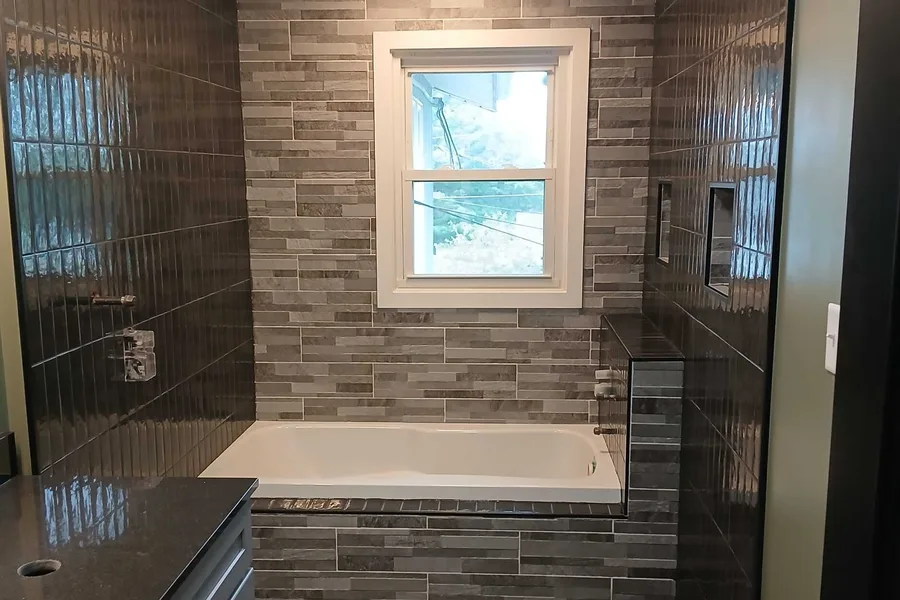
A sign looks best when it picks up something already in the room. That’s easiest to do right after a bathroom remodel, when the tile, vanity and fixture finishes are all fresh in your mind. Match the sign’s metal to your faucet, or its wood tone to the vanity, and it’ll look planned instead of added later.
Color and pattern matter as well. A bold sign suits a quiet room, like the ones in our guide to black-and-white bathroom design ideas, while a patterned floor or wall calls for something simple. If you’re still choosing surfaces, our look at the top bathroom tile trends can help you settle the big decisions before the small ones.
Our work is the room itself: the tile, vanity, shower, and flooring. The sign is the finishing touch you get to pick yourself, and it’s much easier to choose once the surrounding surfaces are settled.
Frequently Asked Questions About Bathroom Signs
These are the questions people ask most often when they start shopping. The answers are short, and the sections above go into more detail.
What Are Some Funny Bathroom Signs?
The classics are short, like “Please Seat Yourself,” mock house rules, or a note about what to do when the toilet paper runs out. Dry humor tends to last longer than anything crude. One funny sign per bathroom is usually plenty.
How Can I Create My Own Bathroom Sign?
Most online sign shops have a design tool where you choose a size and material, type your text, and add icons or upload a logo. For a home bathroom, you can also create one by hand with a sealed wood plaque and paint or a vinyl decal. A sign for a business restroom should come from a seller that makes tactile braille signs to the ADA standards.
What Are the Figures on Bathroom Signs Called?
They’re called pictograms. The familiar standing man and woman figures come from a set of public symbols that AIGA, the professional association for design, developed with the U.S. Department of Transportation in the 1970s. The wheelchair figure is the International Symbol of Accessibility.
What Is the Standard Size of a Bathroom Sign?
There’s no single required size for the whole sign. Many restroom signs sold for businesses measure about 6 by 9 inches or 8 by 8 inches, and home signs vary far more. The ADA standards set sizes for parts of the sign instead, such as the raised text height and the pictogram field.
Plan the Room Before the Finishing Touches
A sign is a small detail, and it works best in a bathroom that already fits the way you live. Innovative Kitchen and Flooring has remodeled kitchens and bathrooms across South Central Pennsylvania and Western Maryland since 2015, from simple vanity and flooring updates to full remodels. If your bathroom needs more than a new sink, contact us to plan a visit to our Chambersburg or Frederick showroom by appointment.