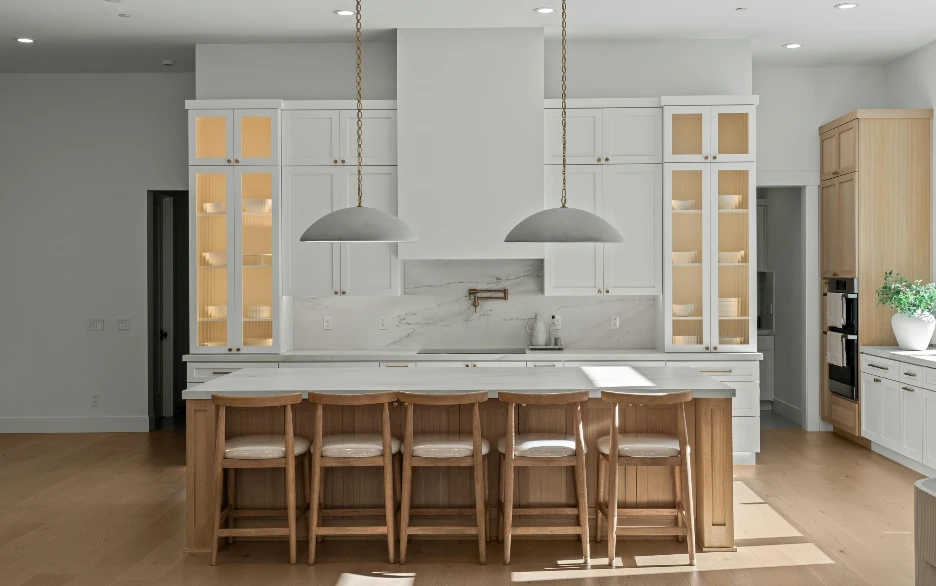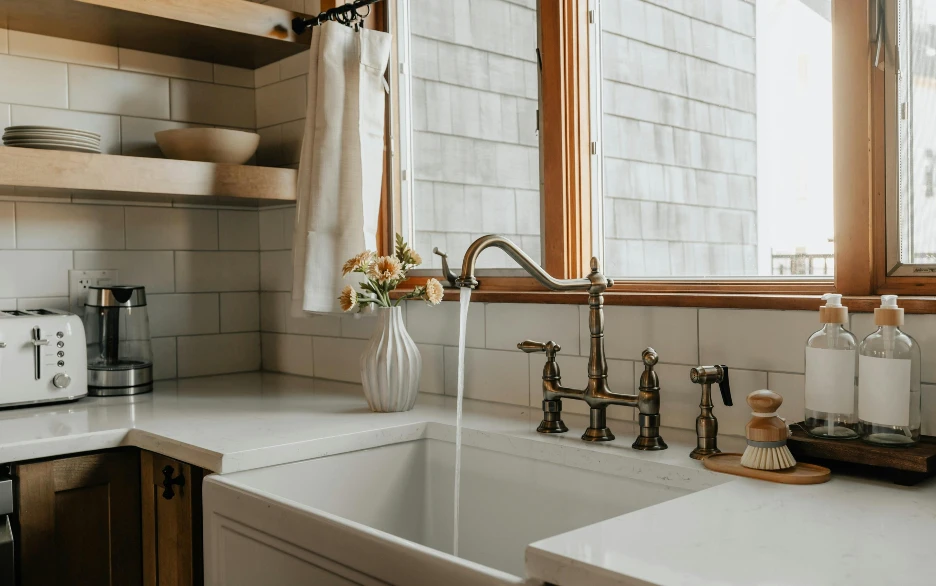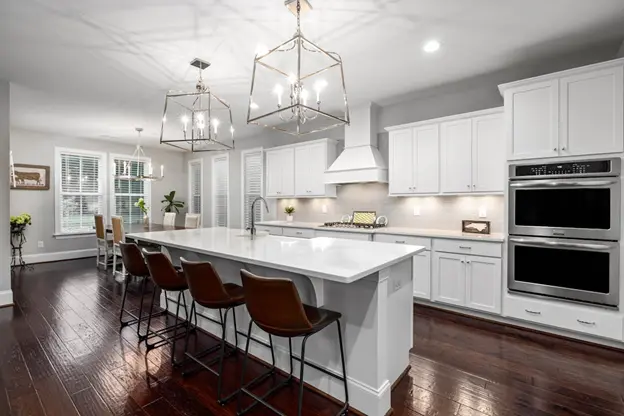


Ever walked into a kitchen that looks beautiful but somehow feels too dark, too bright, or just a little off? Chances are, the lighting has something to do with it. Choosing the right kitchen light fixtures means finding the right balance between ambient lighting from ceiling lights, task lighting over countertops and sinks, and decorative touches like pendant lights over the kitchen island. Get that combination right, and your kitchen won’t just look better. It’ll work better, too.
That sounds like a lot to juggle, but it comes down to a handful of decisions. At Innovative Kitchen and Flooring, we start kitchen remodeling consultations with lighting because the fixtures you choose shape how the cabinets, countertops, and backsplash look every day. This guide walks through the same questions we ask homeowners in Frederick, MD, and Chambersburg, PA, so you can plan your kitchen lighting with confidence.
Why Kitchen Lighting Deserves a Plan
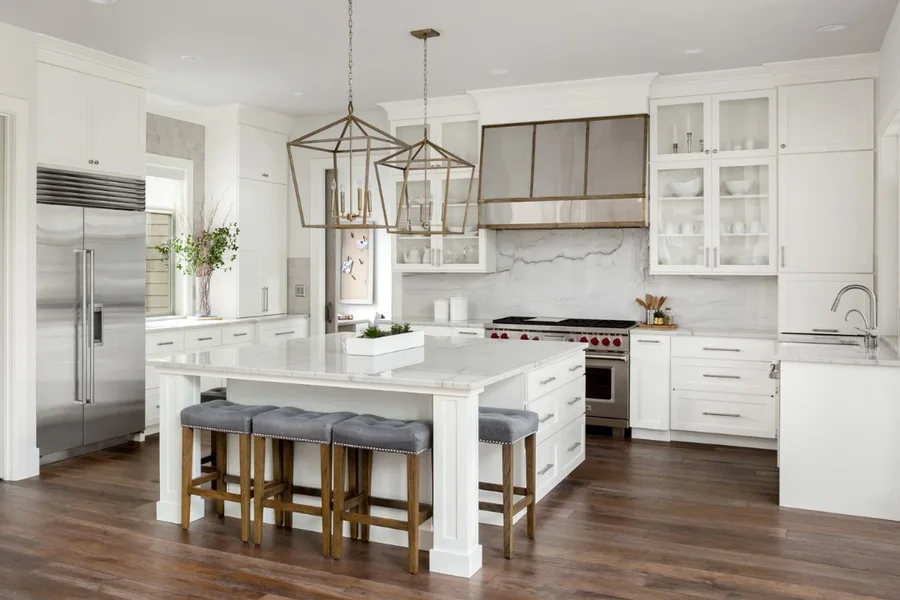
A kitchen demands more of its light fixtures than other rooms. You chop vegetables, read recipes, wipe down surfaces, help with homework at the counter, and sit down with family for dinner, often in the same hour. One overhead fixture in the middle of the ceiling cannot do all of that well. It leaves dark spots on the work surface, throws your own shadow across the cutting board, and makes a new kitchen feel tired before the paint is dry.
Good lighting fixes those problems quietly. When the light source sits where the work happens, the countertop looks brighter, the cabinet colors look true, and the room feels larger. That is why designers talk about layering kitchen lighting rather than picking a single fixture.
The Three Layers of Kitchen Light Fixtures
Think of your kitchen lighting in three layers. Most kitchens need all three, and your mix depends on how you cook and use the room.
Ambient Lighting: Ceiling Lights and Overhead Fixtures
Ambient lighting is the general fill that lets you walk into the room and see everything. Overhead fixtures such as flush mounts, semi-flush mounts, and recessed lighting provide it. In a kitchen with a standard eight-foot ceiling, a few well-placed can lights or one low-profile ceiling light usually handle the job. In a larger room with a higher ceiling, a central fixture plus recessed lighting around the edges keeps the corners from going dim.
Task Lighting: Light Where You Actually Work
Task lighting is the layer most older kitchens are missing. It puts direct light on the countertop, the sink, the stove, and any other work surface. Under-cabinet lights are the workhorse here, because they illuminate the counter without casting your shadow across it. Brighter task lighting over the sink, often a small pendant or a recessed fixture, makes dishes and prep work easier on your eyes.
Decorative Lighting: Pendant Lights, Chandeliers and Wall Sconces
Decorative lighting is the layer people fall in love with first. Pendant lights over the kitchen island, a chandelier over the dining area, or a pair of wall sconces beside a window add personality and sparkle. They still provide useful light, but their main job is to set the room’s style. A kitchen with only decorative fixtures looks pretty and works poorly, so plan this layer last, after the ambient and task layers are set.
Start With How You Use the Room
Before you shop for fixtures, spend a week paying attention to where you stand in your kitchen. Where do you prep? Where does the family gather? Where does the light fall short at night?
Those notes tell you which layer needs the most attention. A household that cooks every evening needs strong task lighting over the counter and stove. A family that uses the kitchen island as a homework desk and coffee bar needs bright enough pendant lights to read under. A kitchen that opens into a living room needs ambient lighting that blends with the other rooms rather than fighting them.
Natural light matters, too. A kitchen with a large south-facing window needs fewer fixtures during the day but still needs a full plan for evenings and winter mornings. A windowless kitchen has to create all its light, and warm, layered fixtures keep it from feeling like a workroom.
Choosing Pendant Lights for a Kitchen Island
Pendant lights are the most common decorative fixtures in a modern kitchen, and the kitchen island is where they belong. A few guidelines keep them in proportion.
Hang pendants so the bottom of the fixture sits 30 to 36 inches above the countertop. That height keeps the light on the counter and the fixture out of your sight line when you are standing across the island. For a taller ceiling, hang them a little higher so the room does not feel cramped.
Size the pendants to the island. Two or three medium pendants suit a six-to-eight-foot island; a single large fixture or a linear pendant suits a smaller one. Leave at least 30 inches between pendants and about six inches of clearance from each end of the island.
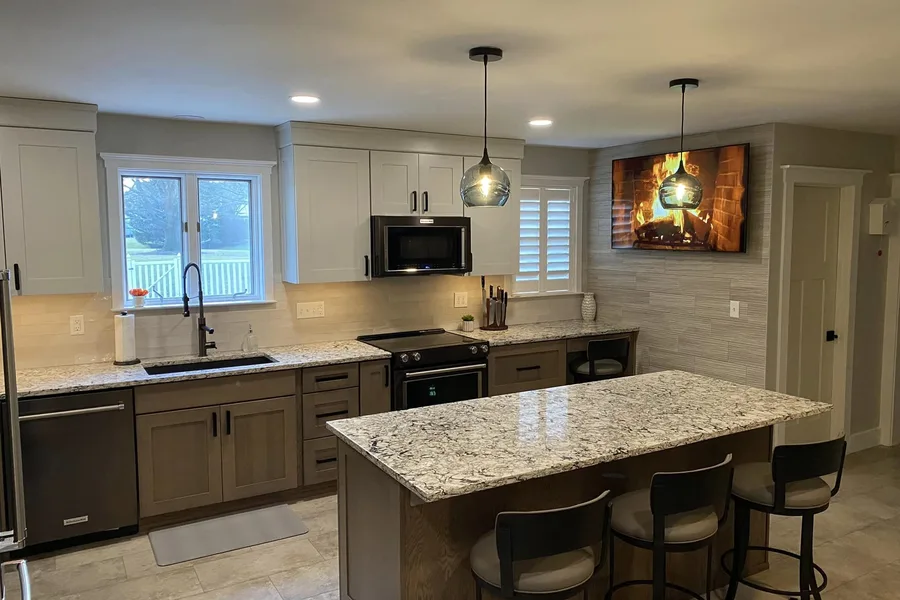
Pick a shade that suits the way you use the island. Glass pendants spread light widely and keep the counter bright, which is ideal when the island doubles as a prep surface. Metal or fabric shades aim light down and create a cozier, more focused glow for a breakfast bar. If your kitchen opens to a dining table in the next room, choose pendants that match the dining fixture in finish or shape.
Pendant lights are still very much in style. The trend for 2026 leans toward larger, simpler shapes in brass, matte black, and aged bronze, with fewer fixtures that each make a bigger statement. Clusters of three small glass globes look busy next to today’s wide islands.
Under Cabinet Lights: The Upgrade You Will Use Every Day
If you add only one new light fixture to your kitchen, make it under-cabinet lights. They turn the countertop into a well-lit work surface and show off the backsplash in the evening.
LED light bars are the best choice for most kitchens. They run cool, last for years, and come in lengths that match standard cabinet widths. Mount them toward the front edge of the upper cabinet, behind the face frame, so the light washes back across the counter instead of glaring into your eyes. Puck lights work when you want pools of light on a display shelf, but they leave uneven bright and dark spots on a long counter.
Choose a color temperature around 2700K to 3000K for a warm light that matches most pendants and ceiling fixtures. Cooler, bluer bulbs make food look flat and clash with wood cabinet finishes. If you prefer brighter task lighting for detailed work, pick a dimmable bar and set it high while cooking and low while entertaining.
Plan the wiring early. Hardwired under-cabinet lights on a wall switch look cleanest, and the best time to run that wiring is during a remodel, when the cabinets are off the wall. Plug-in kits work in an existing kitchen, but the cord has to find a path to an outlet.
Recessed Lighting and Can Lights Done Right
Recessed lighting earns its place as ambient lighting, but it is easy to overdo. A ceiling peppered with can lights in a grid pattern creates glare and still leaves the counter in shadow, because the light lands on the floor and the top of your head instead of the work surface.
A better approach is to place can lights where they do a job. Set a row about 18 to 24 inches off the wall, centered over the counter edge, so the light reaches the front of the countertop. Add one over the sink and one near the range if the hood does not include a light. Use four-inch LED fixtures rather than the older six-inch cans; they look cleaner and give you more control over placement.
Put the recessed lights on a dimmer and on a separate switch from the pendants and under-cabinet lights. Being able to turn each layer on and off independently is what makes a layered plan work in real life.
Match Fixture Style to Your Kitchen
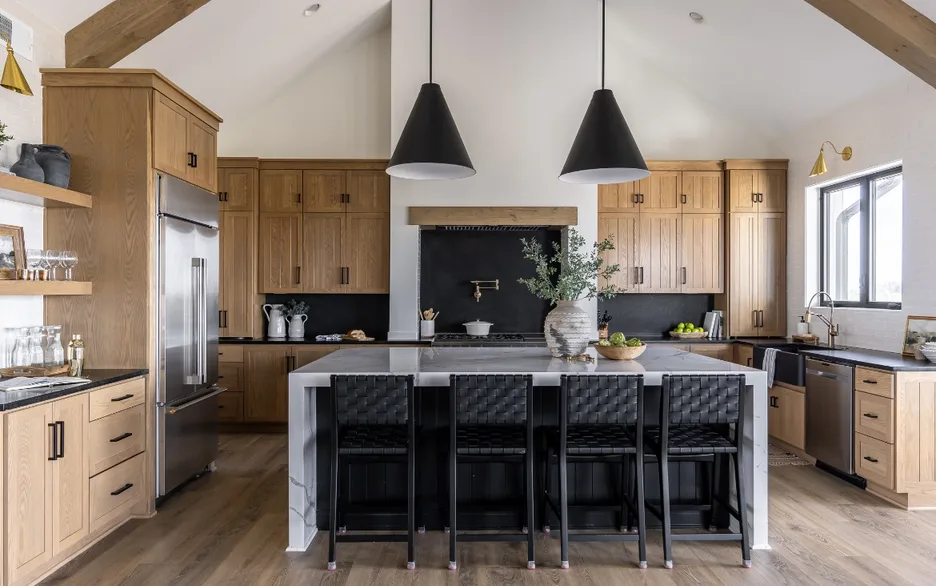
Light fixtures carry much of a kitchen’s style because they sit at eye level and in the center of the room. A few pairings tend to work well.
A contemporary kitchen with flat-panel cabinets and quartz countertops suits simple linear pendants, chrome or matte black finishes, and clean recessed lighting. A farmhouse or transitional kitchen with shaker cabinets looks right with lantern-style pendants, aged brass or oil-rubbed bronze, and perhaps a small chandelier over the table. A traditional kitchen can take an antique-style fixture, a crystal chandelier over the dining area, or hanging lights with a fabric shade.
Keep the finishes matching, or at least related. Brass pendants over the island, brass cabinet hardware, and a brass faucet feel intentional. Brass over the island, chrome at the sink, and black on the ceiling feel accidental. If you want to mix metals, pick one dominant finish and one accent, and repeat each at least twice around the room.
Scale matters as much as style. A fixture that looked right in the showroom can look lost over a ten-foot island or oversized in a galley kitchen. Measure the space, note the ceiling height, and bring those numbers when you shop.
Bulbs, Wattage and Switches
The fixture is only half the decision. The bulbs inside it decide how the room actually looks.
Choose LED bulbs for every fixture. They use a fraction of the wattage of older bulbs, run cool near cabinets, and last for years. Pick a consistent color temperature across the room, usually 2700K or 3000K, so the pendants and the ceiling lights do not fight each other. Look for a high color rendering index (90 or above) so food and cabinet finishes look natural.
Plan your switches as carefully as your fixtures. Each layer should have its own switch, and most of them should be dimmers. A kitchen with ambient, task, and decorative lighting on three dimmers can go from a bright morning workspace to a soft evening dinner setting with three small adjustments. Smart switches add scheduling and voice control, which many homeowners now prefer, but a simple dimmer does most of the work.
Common Kitchen Lighting Mistakes to Avoid
A few errors come up again and again in kitchens we are asked to remodel.
Relying on a single ceiling fixture is the most common one, and it leaves the counters in shadow. Hanging pendants too high or too low is another; too high and they glare in your eyes, too low and they block the view across the island. Mixing color temperatures makes one fixture look yellow and another look blue. Skipping under-cabinet lights to save a little money is a decision most homeowners regret within a month. Finally, choosing fixtures before the cabinet layout is final can leave a pendant hanging off-center over the island or a can light blocked by a cabinet crown.
How Lighting Fits Into a Kitchen Remodel
Lighting is easiest to get right when it is part of the whole project rather than an afterthought. When we plan a kitchen, we draw the fixture layout alongside the cabinets, countertops, and backsplash, so every outlet, switch, and junction box lands where it belongs before the walls close up.
That timing also lets the lighting show off the materials you have chosen. Under-cabinet lights make a glass tile backsplash sparkle, pendants in the right finish tie into cabinet hardware, and well-placed recessed lighting keeps a dark countertop from swallowing the room. If you are updating kitchen cabinets or exploring new kitchen designs for 2026, bring your lighting ideas into that conversation from the start.
Frequently Asked Questions About Kitchen Light Fixtures
What type of lighting is best for a kitchen?
A layered plan is best: ambient lighting from ceiling lights or recessed fixtures, task lighting from under-cabinet lights and fixtures over the sink and stove, and decorative lighting such as pendant lights over the kitchen island. No single fixture type does all three jobs well.
What lights are best for under kitchen cabinets?
Dimmable LED light bars are the best under-cabinet lights for most kitchens. They give even light along the whole counter, run cool, and last for years. Mount them near the front edge of the cabinet so the light washes back across the countertop.
Are kitchen pendant lights still in style?
Yes. Pendant lights remain the most popular fixture over a kitchen island. Current trends favor fewer, larger pendants in brass, matte black, or aged bronze over clusters of small glass globes.
Is daylight or cool white better for the kitchen?
Neither, for most homes. Warm white bulbs around 2700K to 3000K make food, wood, and stone look natural and match the rest of the house. Save daylight bulbs for a workshop or laundry room.
What is the 5 to 7 lighting rule?
It is a quick way to space recessed lights: divide the ceiling height by two to find the distance between can lights, and place the outer row half that distance from the wall. In an eight-foot kitchen, that means roughly four feet between fixtures and two feet from the wall, adjusted so the light lands on the counters.
Can I install a ceiling light myself?
Replacing a fixture on an existing box is a reasonable project for a confident homeowner, as long as the power is off. A licensed electrician should add new fixtures, run wiring for under-cabinet lights, or move a junction box, and in many areas, it requires a permit.
What light fixtures are out of style?
Fluorescent box lights, large track lighting systems, and dated dome flush mounts make a kitchen look older than it is. Replacing them with recessed lighting and a few well-chosen pendants is one of the quickest ways to refresh the room.
Plan Your Kitchen Lighting With Innovative Kitchen and Flooring
Choosing kitchen light fixtures is easier when you can see them next to real cabinets, countertops, and backsplash samples. Visit our showrooms in Chambersburg, PA, or Frederick, MD, and our team will help you layer ambient, task, and decorative lighting into a kitchen that works as well as it looks. Contact Innovative Kitchen and Flooring today to schedule a free consultation.